The More You Shop, The More You Pay: How Airlines Punish Price Comparison in Real Time

You've been there. You open a tab, check a fare, open another tab, check again — and somehow, by the time you're ready to pull the trigger, the price has gone up. You figure it's just bad timing, maybe a seat sold out, maybe the algorithm refreshed. But what if the act of looking is exactly what's making it worse?
Airlines have quietly built pricing systems sophisticated enough to treat your research behavior as a buying signal — and they're using it against you.
What Dynamic Pricing Actually Means (It's Not What Most People Think)
Most travelers understand that flight prices change. What they don't fully grasp is how they change. It's not just about supply and demand in the traditional sense. Modern airline revenue management systems are behavioral engines. They're not only tracking how many seats are left — they're tracking who's looking at those seats and how urgently.
Airlines and their booking platform partners collect a staggering amount of session data: how long you've been on a search page, how many times you've run the same query, whether you've bounced to a competitor and come back, and even how your cursor moves across the screen. This data feeds pricing models that can adjust fares in near real time.
The technical term revenue management teams use internally is "demand signaling." Every action you take while shopping sends a signal. And the more signals you send, the more the system interprets you as a motivated buyer — someone willing to pay more.
The Tab Problem: Why Opening Multiple Windows Backfires
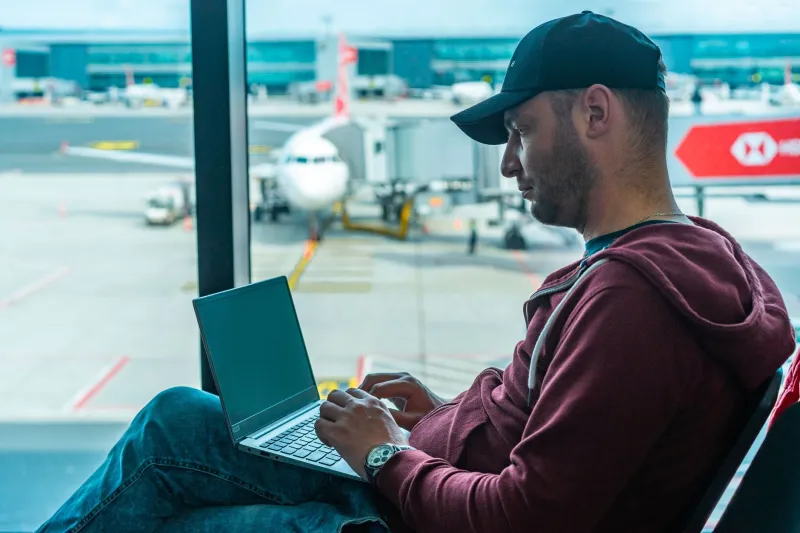
Here's a scenario that plays out millions of times a day. A traveler searching for a round trip from Chicago to Miami opens the airline's site, then Google Flights, then Kayak, then circles back to the airline directly. They think they're being smart and thorough. The algorithm thinks they're desperate.
Every return visit to the same route — especially within the same browsing session or across sessions tied to the same device or IP address — registers as increased intent. Some pricing systems are designed to respond to this by tightening inventory displays, surfacing fewer low-fare buckets, or bumping the displayed price by $15 to $40 on the return leg specifically.
Why the return leg? Because that's where airlines have historically had more pricing flexibility. The outbound fare is often used as a hook — a competitive, visible number that gets you in the door. The return fare is where margin gets recovered. When the system detects high intent, it adjusts the return price first.
Real Examples of the Price Creep
Travel researchers and fare-tracking communities have documented this pattern repeatedly. In one widely shared experiment, a traveler searched the same round-trip route on the same airline's website six times over two days without clearing cookies or switching networks. The outbound price held steady. The return fare increased by $34 after the third search and another $22 after the fifth.
Another common pattern: searching on a booking aggregator, clicking through to the airline site, then returning to the aggregator to compare. That back-and-forth behavior — which looks like classic indecision — can trigger what some in the industry call a "hesitation premium." The system isn't punishing you for being cheap. It's rewarding itself for detecting that you haven't left yet.
What the Airline Industry Won't Say Out Loud
Airlines are legally permitted to price dynamically, and they're not required to disclose how their algorithms work. When asked directly, most carriers offer vague statements about "market-based pricing" and "real-time inventory management." What they don't say is that your browsing session is part of that market.
Third-party booking platforms are often complicit, too. Their affiliate arrangements with airlines create incentives to surface higher fares to users who appear close to booking — because a higher fare means a higher commission.
How to Outsmart the System
The good news: the algorithm isn't magic, and there are concrete ways to work around it.
Search cold, decide fast. Do your initial research on a device or browser profile you don't normally use for travel. Look up fares, note the prices, then close everything. Come back within a short window — ideally under an hour — on a fresh session to actually book. You want to appear as a new visitor, not a returning one.
Use flight price alert tools instead of active searching. Services like Google Flights alerts, Hopper, or Kayak's price tracker let the system surface fares to you passively. You're not generating session data by actively hunting. Set alerts for your route and let the fare come to you.
Book the return leg first, or at least price it separately. Because the return fare is where dynamic pricing tends to hit hardest, check it in isolation before you build the full round-trip query. A standalone search for the return leg shows up in the system differently than a round-trip package search initiated by someone who's already been browsing for hours.
Clear cookies and switch networks between research sessions. It's not foolproof, but it resets some of the behavioral tracking that ties your sessions together. Using a mobile device on cellular data while your earlier searches were on home Wi-Fi creates a different fingerprint.
Don't linger on the checkout page. Once you've committed to a fare, move through the booking process without pausing. Abandoning a cart — especially on an airline's direct site — is one of the strongest demand signals you can send, and many systems will respond with a price increase on your next visit.
The Bottom Line
The airline pricing system isn't neutral. It's designed to extract maximum value from every traveler, and your comparison-shopping behavior is data it actively uses to do that. The smartest approach isn't to research more — it's to research differently. Go in cold, move quickly, and don't let the algorithm learn your habits before you've had a chance to book the deal you actually found.