You Booked the Return Flight. You're Never Taking It. Is That Okay?
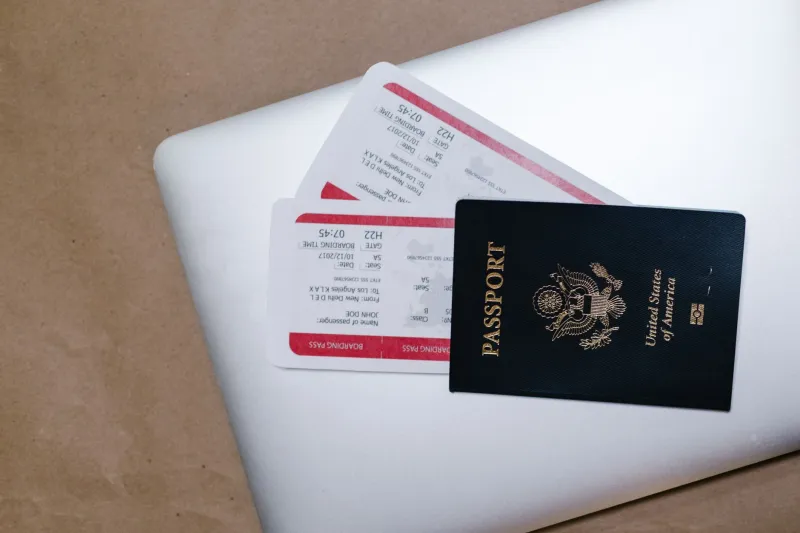
Let's say you're moving from Chicago to Lisbon. Or you scored a one-way gig in Austin and you're not coming back. Or maybe you just need to fly to Miami next month, and somehow a round-trip ticket is $80 cheaper than the one-way. You book the round-trip, you use the outbound leg, and the return flight just... sits there unused.
Is that allowed? Is it fraud? Will your frequent flyer account get nuked?
The short answer: it's legal, it's surprisingly common, and the risks — while real — are often overstated. But there's a lot of nuance here that most travel writers gloss over. Let's actually dig in.
First, Let's Separate This From Hidden-City Ticketing
Before we go further, it's worth drawing a clear line between what we're talking about and hidden-city ticketing, because people confuse them constantly.
Hidden-city ticketing is when you book a flight through your actual destination — say, a Chicago-to-Denver-to-Seattle ticket — and you get off in Denver, skipping the final leg. Airlines genuinely hate this because it messes with their load balancing and pricing models. It's technically a violation of most carriers' contracts of carriage, and if you do it repeatedly, you can get your account flagged or banned.
What we're discussing here is different. You're booking a standard round-trip — New York to Los Angeles and back — using the outbound leg and simply not showing up for the return. You're not deceiving anyone about where you're going. You arrive at your actual destination. You just don't come home on that particular ticket.
Airlines know this happens. They price for it. And while it's not exactly behavior they encourage, it doesn't violate their contracts the way hidden-city ticketing does.
So Why Is a Round-Trip Sometimes Cheaper Than a One-Way?
This one always trips people up, because it feels backwards. Shouldn't buying more flight equal spending more money?
Not in airline pricing logic. Airlines use round-trip fares as a way to lock in revenue on both directions of a route. They'd rather sell you two seats at a slightly reduced combined rate than risk one of those seats going empty. One-way tickets, on the other hand, get priced at a premium because airlines know the people buying them often have less flexibility — they have to go, and they're not coming back on the same carrier.
The result is a pricing quirk where a round-trip can legitimately undercut a one-way on the same route by anywhere from $30 to several hundred dollars, depending on the route and timing. Budget travelers have been quietly exploiting this gap for years.
The Legal Reality (It's Less Dramatic Than You'd Expect)
Here's the thing: when you buy a plane ticket, you're entering into a contract with the airline. That contract — the Contract of Carriage — spells out what you can and can't do. And in most major U.S. carriers' contracts, simply not using a return flight isn't listed as a prohibited act.
Delta, United, American — none of them explicitly prohibit you from skipping your return leg. What they do prohibit is using a ticket in a way that's designed to circumvent their fare structures in a deceptive way. Not showing up for a flight you paid for doesn't really qualify.
The practical consequence? Your return flight gets canceled automatically when you no-show. That seat goes back into inventory. The airline moves on. You're out the money you spent on that leg, but that's it. No account suspension, no ban, no angry letter.
Where it gets more complicated: if you've got checked baggage, it will be tagged through to your final destination. That's a logistical headache you'll need to plan around — carry-on only if you're doing this intentionally.
When This Strategy Actually Makes Sense
You're relocating. This is probably the most common real-world use case. People moving abroad or across the country one-way often find round-trip tickets significantly cheaper than one-way fares. If you're not coming back, you're not coming back — but you can still save money on the outbound trip.
You've got a flexible end date. Maybe you're traveling open-ended and you genuinely don't know when you're returning. Booking a round-trip gives you a cheaper outbound fare and a return date placeholder you may or may not use. If you end up flying home earlier or later, you book a separate ticket when you're ready.
You need proof of onward travel. Some countries — particularly in Southeast Asia, Central America, and parts of Europe — require visitors to show a return or onward ticket at the border or even at the check-in counter. A fully booked round-trip satisfies that requirement, even if you never intend to use the return leg. It's a widely used workaround among long-term travelers.
The price difference is significant. This is the math that justifies everything. If a one-way to Denver costs $310 and a round-trip costs $198, you're saving $112 even after throwing away a return flight. That's not a rounding error — that's a real decision worth making.
When It Backfires
This strategy isn't without traps. Here are the scenarios where it can go sideways:
You're flying internationally and need a visa. Some visa applications ask about your travel plans, and booking a return you don't intend to use could create inconsistencies if you're also telling the consulate you're relocating. Keep your documentation consistent.
You're using miles or points. Award tickets sometimes have stricter rules around no-shows and cancellations. Always read the fine print on your loyalty program before leaving a mileage ticket unused.
You get hit with a no-show fee. Some airlines — particularly budget carriers — charge no-show fees that can eat into your savings. Check the fare rules before assuming you'll just quietly skip the return.
You've got connecting flights on the return. If your return itinerary is multi-leg, skipping the first segment of the return can cause the airline to cancel subsequent legs automatically. That's fine if you're not using any of them, but it can affect other bookings on the same PNR if you're not careful.
The Honest Risk Assessment
For most travelers doing this once or occasionally, the real-world risk is minimal. You're not gaming the system in a way that harms other passengers or manipulates routing. You bought a ticket, you flew on it (partially), and you didn't use the rest. Airlines account for this in their pricing models.
The bigger risk is financial: you're paying for something you won't use. So the math has to actually work in your favor before this is worth doing. Run the numbers. If the round-trip is only $15 cheaper than the one-way, it's not worth the mental overhead. If it's $150 cheaper, that's a different conversation.
At Return Flights, we're all about finding the smartest path between two points — and sometimes the smartest path involves a return ticket that never gets used. Just go in with your eyes open, check the fare rules, and make sure the savings are real before you commit.
The phantom return flight isn't a loophole. It's just math.