That 'Direct' Flight Home Might Not Be What You Think — Here's How Airlines Hide the Truth
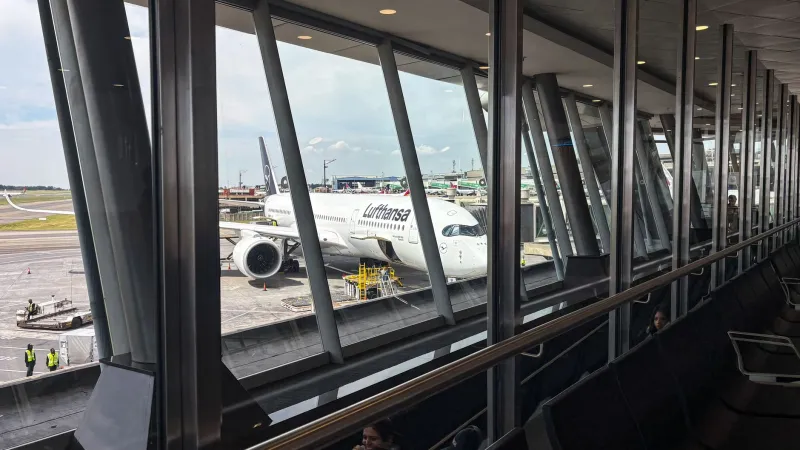
Picture this: you've done everything right. You searched specifically for direct flights home, filtered your results, picked what looked like a clean nonstop option, and hit book. Then the day arrives, and somewhere between wheels up and landing, your plane makes an unscheduled stop at an airport that was never mentioned during checkout.
Welcome to one of the most frustrating — and surprisingly common — tricks in commercial aviation.
This isn't a conspiracy theory. It's a real quirk of how airlines categorize and market their routes, and it hits return flights especially hard. If you've ever felt confused about the difference between "direct" and "nonstop," that confusion isn't accidental. Airlines have been exploiting it for decades.
Direct vs. Nonstop: The Definition Gap Airlines Love
Here's the thing most travelers don't know: in airline terminology, "direct" and "nonstop" are not the same thing. Not even close.
A nonstop flight is exactly what it sounds like — the plane takes off from Point A and lands at Point B with no stops in between.
A direct flight, by the official industry definition, simply means the flight maintains the same flight number from origin to final destination. The plane can — and sometimes does — land at intermediate airports along the way. Passengers may or may not need to deplane. Sometimes new passengers board. Then everyone flies on together.
So when you search for a "direct" return flight and one pops up that looks suspiciously cheap, there's a decent chance it's not nonstop at all. It just keeps the same flight number while making a pit stop you weren't told about.
This distinction matters more on return flights than outbound ones. Why? Because travelers tend to be more rushed, more tired, and less likely to scrutinize the details when they're booking the trip home. Airlines know this.
Why Return Flights Are Especially Vulnerable
When people plan travel, they typically spend more energy on the outbound leg. The return flight often gets booked quickly, sometimes as an afterthought, or as part of a round-trip package where the details of each leg aren't broken down clearly.
Third-party booking platforms — think major aggregators and online travel agencies — don't always surface intermediate stop information prominently in their listings. A search result might show "direct" in bold, while the actual routing details are buried in a collapsible itinerary section or hidden behind a "flight details" link that most people never click.
Airlines aren't technically lying. They're using industry-standard terminology. But they're absolutely counting on the fact that most travelers won't know the difference — or won't look closely enough to find out.
Real Examples of Misleading Return Listings
This isn't hypothetical. Travelers have reported booking what appeared to be direct return flights from cities like Miami, Denver, and Seattle, only to discover en route that the plane was making a stop in a hub city — Dallas, Chicago, or Atlanta — before continuing on.
In several documented cases on travel forums, passengers booked return flights labeled "direct" on aggregator sites, paid prices comparable to or slightly below nonstop options, and weren't informed of the intermediate stop until they checked in or received a gate change notification at the airport.
One particularly common pattern involves smaller regional routes. A return flight from a vacation destination to a mid-sized US city might route through a major hub, with the whole itinerary listed under one flight number and described as "direct." The stop adds anywhere from 45 minutes to two-plus hours to the total travel time — time you didn't budget for, and potentially a connection risk you didn't sign up for.
How to Verify Your Return Flight Is Actually Nonstop
The good news: catching this before you book isn't hard once you know what to look for. Here's a practical checklist.
1. Filter specifically for "nonstop" — not "direct." Most booking platforms let you filter by stops. Always select "nonstop" rather than "direct" if both options appear. If the platform only offers "direct" as a label, dig deeper before committing.
2. Click the full flight details before booking. Every reputable booking platform has a way to expand the itinerary. Look for any intermediate airports listed between your departure and arrival cities. If you see one, that flight is not nonstop — regardless of how it's labeled.
3. Cross-check directly on the airline's website. Once you have a flight number, go to the airline's own site and look it up. Airline sites are generally more transparent about intermediate stops than third-party aggregators. If the route shows a stop on the airline's site that wasn't visible during your original search, that's your red flag.
4. Use Google Flights for route verification. Google Flights is unusually good at displaying stop information clearly. Even if you plan to book elsewhere, run the same search on Google Flights first. The interface shows nonstop and one-stop options in clearly separated tiers, and hovering over a flight usually reveals the full routing.
5. Check the total flight duration. A return flight that's listed as "direct" but has a suspiciously long duration compared to what you'd expect for that route is a dead giveaway. If flying from Orlando to Kansas City typically takes about two and a half hours nonstop, and your "direct" option shows four hours, something's off.
6. Read the fine print on the confirmation email. After booking, your confirmation should list all segments. If it shows only one flight number but includes an intermediate city, call the airline before your trip to clarify what happens at that stop.
What to Do If You've Already Booked One
If you've already got a return flight booked and you're now realizing it might have a hidden stop, don't panic. Call the airline directly and ask for clarification on the routing. Ask specifically: "Does this flight land at any intermediate airports before my final destination?"
If you discover there is an undisclosed stop and it significantly changes your travel time or plans, many airlines will work with you — especially if you booked recently. You may have options to rebook on a true nonstop for a fee, or in some cases, the airline may accommodate the change without one if the stop wasn't disclosed clearly.
The Bottom Line
The travel industry runs on terminology that sounds intuitive but isn't. "Direct" is one of the most abused words in flight marketing, and it disproportionately affects the return leg of your trip — the one you're most likely to book fast and review slowly.
A few extra minutes of due diligence before you confirm that return flight can save you hours of unexpected travel time, a missed connection, or the sinking feeling of watching your plane land somewhere you didn't plan to be.
Book smart. Read the details. And when in doubt, search for nonstop — because "direct" doesn't always mean what you think it does.