Booking for Two? Airlines May Already Be Charging You a Couple's Tax
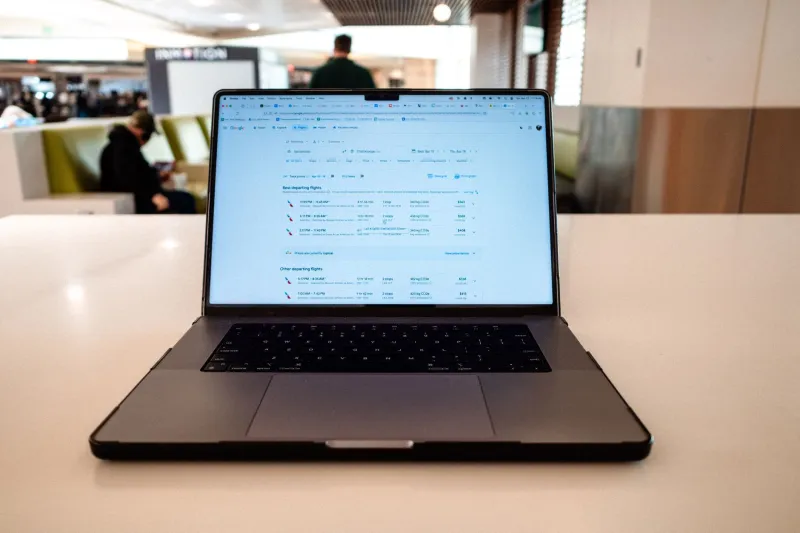
Traveling with your partner, your best friend, or your whole family should feel like a win. More company, shared costs on hotels, someone to split the Uber. But when it comes to round-trip airfare, adding a second passenger to your search might quietly be one of the most expensive decisions you make — before you even hit "buy."
Welcome to what frequent flyers and data nerds have started calling the companion pricing effect: the phenomenon where booking multiple seats on the same round trip pushes the per-person cost higher than if you'd each searched solo.
Why Your Search Party Size Is Part of the Algorithm
Here's the thing most travelers don't realize: when you enter "2 passengers" into a flight search, the airline's pricing engine doesn't just multiply one seat price by two. It reassesses inventory availability across the entire cabin for both legs of your trip simultaneously.
Airlines use what's called fare bucket logic. Every flight has a fixed number of seats allocated to each price tier — maybe 4 seats at $189, then 8 seats at $229, then more at $289, and so on. When you search for a single seat, the engine finds the lowest available bucket with at least one opening. But when you search for two seats on a round trip, it needs two seats in that same bucket on both the outbound and the return flight.
If there's only one seat left at the cheapest tier on your return leg, the system bumps your entire booking — both passengers, both directions — to the next price level. You don't get one cheap seat and one expensive one. You get two expensive ones.
The "Seat Lock" Problem on Return Flights
Return flights are where this gets especially punishing. Outbound flights on popular routes tend to have more available inventory earlier in the booking window. But return flights — particularly those on Sunday evenings, Monday mornings, or the day after a holiday — often have already absorbed a wave of single-seat bookings by the time you start searching.
So even if your outbound seats are plentiful, your return flight might have just one seat left at the fare you want. And that one seat ruins the math for your entire booking.
This is a structural quirk of round-trip pricing that disproportionately hits group travelers, and airlines have little incentive to fix it or explain it to you.
The Separate Booking Test
So does it actually cost less to book separately? Sometimes, yes — and the difference can be real money.
Here's a practical framework to check before you buy:
Step 1: Search your route with 2 passengers and note the total per-person price for the round trip.
Step 2: Open a private/incognito browser window, switch to 1 passenger, and search the exact same dates and route. Write down that per-person price.
Step 3: If the single-passenger price is lower, have your travel companion do the same search independently — ideally from a different device on a different network.
Step 4: Compare the combined cost of two separate single-passenger bookings against the two-passenger booking total.
In many cases, the gap is small enough to ignore. But on popular routes during high-demand windows — think spring break returns, holiday weekend getaways, or summer Friday departures — the difference can run $40 to $120 per person each way. On a round trip for two, that's potentially $160 to $480 left on the table.
When Booking Together Still Makes Sense
Separate bookings aren't always the move. There are real trade-offs to consider.
First, seat selection gets complicated. If you book independently, you're not guaranteed to sit together — and on a 5-hour return flight, that matters. Airlines charge for advance seat selection on most basic economy fares, so the "savings" from separate bookings can evaporate quickly if you each pay $25–$35 to secure adjacent seats.
Second, if one of you needs to change or cancel, your situations become decoupled. That can be a feature (more flexibility) or a bug (no coordinated rebooking) depending on your travel style.
Third, some travel credit cards offer companion fare benefits, lounge access for guests, or bonus points on partner bookings — all of which assume you're on the same reservation. Splitting your booking could forfeit those perks entirely.
The Group Booking Penalty Gets Worse at Three or More
If the two-passenger effect is noticeable, the three-or-more-passenger effect can be dramatic. Family travel searches — four seats, round trip — require the pricing engine to find four seats in the same fare bucket on four separate flight legs. The odds of that happening at the lowest price tier drop significantly as you add passengers.
Families planning round trips to beach destinations, theme park cities, or ski resorts during school break windows are especially vulnerable. The return flight, often on a Sunday or the last day of a break, is almost always the pricing chokepoint.
For groups of three or more, it's worth checking whether splitting into a 2+1 or 2+2 booking structure changes the math. It won't always, but on constrained return inventory, it sometimes unlocks a lower fare bucket for at least part of the group.
What Airlines Won't Tell You
None of this is disclosed in any booking flow. You won't see a message saying "we bumped your price because we only had one seat at this fare on your return." The fare just appears — often indistinguishable from what you'd expect to pay — and most travelers assume it's simply the going rate.
The best defense is curiosity. Search solo before you search together. Use incognito windows. Check the return flight independently. And if the math works out in favor of separate bookings, don't feel guilty about it — you're just playing the same game the airlines designed.
Traveling with someone else is one of life's genuine pleasures. Paying an invisible surcharge for the privilege is not.