Flying Economy There, Business Back: When Mixing Cabin Classes Actually Saves You Money
It sounds like a contradiction. Upgrading half your trip to a premium cabin should cost more than keeping both legs in economy, right? Usually, yes. But "usually" isn't always — and in the gaps between "usually" and "always" is where some genuinely useful round-trip savings hide.
The strategy is called cabin class mixing, and while it's not a magic trick that works on every route, it surfaces real savings often enough that any budget-conscious round-trip traveler should understand how to check for it.
Why Airlines Price Return Premium Cabins Differently
To understand why this works at all, you need a quick look at how airlines think about premium cabin inventory on return flights.
Premium cabins — business class, first class, premium economy — are typically filled through a combination of full-fare ticket buyers, corporate travel accounts, and loyalty program upgrades. On popular outbound routes (think Friday departures, holiday weekend starts), premium demand is high and airlines price accordingly. But the return leg — particularly mid-week returns or off-peak departure times — often has unsold premium inventory sitting empty at departure.
An empty business class seat generates zero revenue. A discounted business class seat on the return leg, sold as part of a mixed-cabin round trip, generates something. Airlines have quietly built pricing structures that allow for this kind of asymmetric cabin booking, and the result is occasionally a round-trip price that's lower than you'd expect given the cabin difference.
This is especially visible on transatlantic routes, transcontinental US routes, and long-haul domestic segments where premium cabins have meaningful inventory and mid-week return demand is soft.
The Basic Math Framework
Before you can evaluate whether a mixed-cabin booking makes sense, you need to do four price lookups — not one or two. Here's the framework:
Lookup 1: Full round trip, economy both ways. Note the total price.
Lookup 2: Full round trip, premium cabin both ways. Note the total price.
Lookup 3: Economy outbound only (as a one-way ticket) + premium cabin return only (as a separate one-way ticket). Add those together.
Lookup 4: Check if the airline offers a mixed-cabin round trip directly — some carriers explicitly sell these, often labeled as "economy outbound / premium return" or similar.
If Lookup 3 or 4 comes in below Lookup 1 — or only marginally above it — you're looking at a situation where mixing cabins is worth serious consideration. The comfort upgrade on your return flight costs you little or nothing in that scenario.
If Lookup 3 comes in significantly above Lookup 1, the math doesn't work and you should book economy both ways unless you actively want to pay for the upgrade.
When This Actually Works (And When It Doesn't)
Mixed-cabin pricing anomalies don't appear on every route. They tend to cluster around specific conditions:
Long-haul routes with high premium inventory: Transatlantic and transpacific routes have more business class seats to fill and more pricing flexibility on return legs. A round trip from Chicago to London, for example, is worth checking for cabin mixing — especially if your return is on a Tuesday or Wednesday.
Off-peak return timing: The more off-peak your return flight, the more likely the airline has unsold premium seats it wants to move. A Sunday departure to Miami and a Thursday return is a better candidate for this strategy than a Friday-out, Sunday-back pattern.
Routes with significant business travel demand: Airlines on heavily corporate routes (New York–Los Angeles, Chicago–San Francisco, Dallas–Washington D.C.) sometimes discount return premium fares aggressively because their primary corporate customers are already locked into contracts. Leisure travelers can occasionally benefit from that pricing.
When it doesn't work: Short-haul domestic routes (under 2 hours), routes where premium cabins are consistently full, and peak travel periods across both legs. During spring break or holiday weekends, premium inventory is spoken for and the pricing anomaly disappears.
The Psychological Pricing Trap to Watch For
Here's where it gets important to be honest with yourself: not every mixed-cabin scenario is a genuine deal. Airlines are aware that the idea of flying home in business class is emotionally appealing, and some pricing structures exploit that appeal rather than genuinely offering savings.
If the mixed-cabin option costs $150 more than economy both ways, that's not a hidden deal — that's a premium you're paying for comfort on one leg. That might be worth it to you personally, but it's not a pricing anomaly. Don't let the framing of "I'm saving money compared to full business class" obscure the fact that you're spending more than the economy round trip baseline.
The genuine savings case is narrow: it exists when the mixed-cabin total is at or below the economy round-trip price, or close enough that the comfort difference on a long return flight makes it an obvious call. Outside that window, you're looking at an upgrade purchase, not a pricing exploit.
Practical Steps to Find These Fares
A few tactical notes for actually hunting these down:
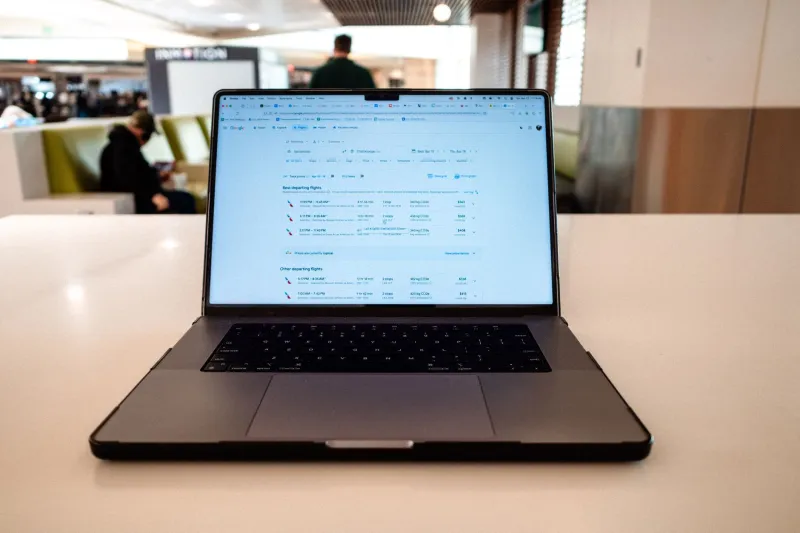
Use flexible search tools. Google Flights lets you compare cabin classes easily and see one-way prices alongside round-trip options. Spend time in the calendar view comparing economy round-trip pricing against the cost of an economy one-way plus a premium one-way on your return date.
Check airline websites directly. Some carriers surface mixed-cabin options in their own booking flows that don't appear on third-party aggregators. It's worth a direct check once you've identified a route worth exploring.
Look at loyalty program upgrade costs. If you have miles or points, the return leg of a round trip is often the easier leg to upgrade using points — especially on routes where mid-week premium inventory is available. The "cost" of the upgrade drops significantly if you're spending miles rather than cash.
Don't ignore premium economy. On long-haul routes, premium economy sits between economy and business in both price and comfort. The mixed-cabin math sometimes works even better when the "premium" leg is premium economy rather than full business class, because the price differential is smaller and the savings threshold is easier to hit.
The Bottom Line
Mixing cabin classes on a round trip isn't a universal money-saving strategy — it's a situational one. It works when airline pricing leaves a gap wide enough to step through, and it doesn't work when it doesn't. The travelers who benefit from it are the ones who do the four-lookup math before assuming the cheapest-looking option is actually cheapest.
Flying home in a wider seat with a real meal and an extra inch of legroom is a genuinely nice experience. Doing it for the same price as the economy round trip you were already going to book? That's the kind of return flight worth planning around.