Now You See It, Now You Don't: The Truth About Return Flight Prices That Vanish Overnight

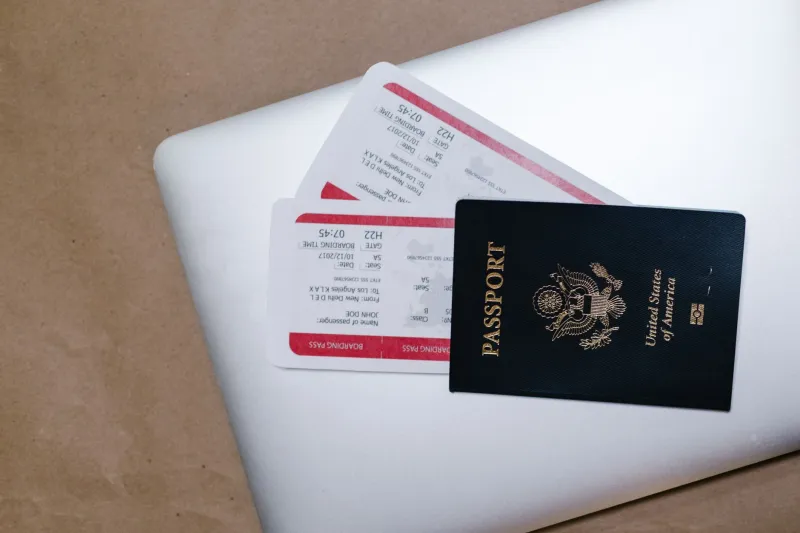
Photo by Photo by Silvie Juong on Unsplash on Unsplash
You've been there. You're deep in a browser tab rabbit hole, comparing return flights from Denver to JFK, and suddenly — there it is. A round-trip price so good you screenshot it just to prove it existed. You close the tab to grab your credit card. You come back. The fare is gone, replaced by something $60, $90, sometimes $120 higher.
This isn't a glitch. It's not a coincidence. And it's definitely not your imagination.
Airline pricing systems are built to do exactly this — and return flights, specifically, are where these tactics hit hardest. Let's break down what's actually going on, and more importantly, what you can do about it.
Why Return Flights Are Targeted Differently
Outbound flights get their share of algorithmic manipulation, sure. But return legs operate under a different kind of pressure. Airlines know something powerful about the psychology of return travel: by the time you're booking your way home, you're already committed. You've booked hotels, maybe taken time off work, possibly bought concert tickets. You need to get home on a specific date. That makes you less price-sensitive — and the algorithms know it.
Airlines segment travelers into what pricing analysts call "captive" and "flexible" buckets. Flexible travelers get shown competitive fares to attract initial interest. Captive travelers — people locked into specific return dates — get hit with higher prices because the algorithm has calculated that they'll pay. When you search for a return flight with a fixed departure city and a hard end date, you're being quietly recategorized in real time.
And that's before we even get into the cookie and session tracking piece.
The Technical Mechanics: How Prices Know You Want Them
Here's where it gets a little uncomfortable. Most major airline websites and booking platforms track your search behavior across sessions. Every time you search that LAX to Chicago O'Hare return leg, you're sending signals. How many times you've looked. How long you hovered on the checkout page. Whether you've searched the same route before.
This data feeds into what's called a dynamic pricing engine — a system that adjusts fares in near-real-time based on demand signals, competitor pricing, seat inventory, and yes, individual browsing behavior. These engines can push prices up within hours of a search spike, sometimes within minutes.
The "fare class" system underneath all of this is also worth understanding. Airlines don't sell seats — they sell buckets of seats at different price points. When you see a great price, you're seeing the last few seats in a discounted fare bucket. Those buckets have tight inventory caps. Once they sell out, the next bucket opens at a higher price. The deal didn't disappear — it sold out. But the effect is the same: you waited, you lost.
Real-World Price Swings: What Tracking Actually Shows
Flight price tracking tools like Google Flights' price history graph and services like Hopper have made it easier to see what's been happening behind the curtain. On popular domestic return routes — think NYC to Miami, Chicago to LA, Dallas to Vegas — it's not unusual to see a 20–40% price swing within a 48-hour window around the time most people are actively browsing (typically Tuesday through Thursday evenings).
On international return legs, the swings can be even wilder. A return flight from London to Boston that was $420 on a Sunday morning has been documented jumping to $560 by Monday afternoon on the same itinerary — same airline, same dates, no major news event driving demand. The only meaningful variable was search volume.
This isn't speculation. Google Flights publishes price tracking data showing that fares on many routes are cheapest when searched at off-peak times — early mornings, late nights — and spike during the hours when most Americans are browsing after dinner.
The Browser Tricks That Actually Work
So what can you actually do? A few things, and they're not complicated.
Use incognito or private browsing mode every time you search. This doesn't guarantee you'll see a different price, but it clears the session data that some platforms use to identify repeat visitors. It's a low-effort baseline move that costs you nothing.
Switch browsers between searches. If you searched in Chrome, try your next session in Firefox or Safari. Cross-browser tracking is harder to pull off, so you're less likely to be flagged as a high-intent repeat searcher.
Use a VPN — selectively. Pricing sometimes varies by geographic location, and a VPN that routes you through a different city or state can surface fares that aren't being shown to your actual location. This is especially relevant for international return flights, where pricing can differ significantly by departure country.
Search on aggregators, book direct. Tools like Google Flights, Kayak, and Skyscanner are excellent for price discovery. But once you find your number, go directly to the airline's website to book. Aggregators sometimes cache prices that have already changed, and booking direct gives you more flexibility if something goes sideways.
How to Actually Lock In a Price Before It Runs
The most reliable tool in your arsenal here is fare locking, and more airlines and booking platforms are quietly offering it. Some airlines — United and American have both offered versions of this — let you hold a fare for 24 hours for a small fee (usually $5–$15). That gives you time to confirm dates, check with travel companions, or just sleep on it without losing the price.
On the platform side, services like Priceline's Express Deals and Hopper's Price Freeze feature work similarly — you pay a small upfront fee to lock in a price for a set window, and if the price goes up, you pay the locked rate. If it goes down, you often get the lower price anyway.
For travelers who find a deal but aren't 100% ready to commit, this is almost always worth it. A $10 hold fee on a $300 return flight is a reasonable insurance premium against a $60 price jump.
Set price alerts the moment you start researching. Google Flights and Kayak both let you track specific routes and dates. The second a price drops to your target range, you get notified. The goal is to be ready to book the moment the alert fires — not to browse again and hope the price sticks around.
The Mindset Shift That Saves You Money
Here's the honest truth about airline pricing: the system is built to reward speed and punish hesitation. That's not cynicism — it's just how dynamic pricing works when inventory is finite and demand is unpredictable.
The travelers who consistently find and keep good return flight deals aren't the ones who browse more carefully. They're the ones who do their research upfront, set their target price, and pull the trigger the moment conditions are right. They treat flight booking less like shopping and more like trading.
You spotted the deal. You know your dates. You've done the comparison. At that point, waiting rarely helps — and it almost always costs you.
The price that disappears overnight isn't a tease. It's a deadline. Start treating it like one.